Why does commercial refrigeration depend on the right components?
Every refrigeration system relies on components working together to remove heat and hold the required temperature. Choosing suitable components supports system performance, operational efficiency and long-term reliability.
From supermarket cold rooms and food storage facilities to commercial refrigeration installations, maintaining the correct temperatures is essential for daily operations. For refrigeration contractors, reliable cooling begins with selecting the right equipment for the application.
This is where informed product selection becomes important.
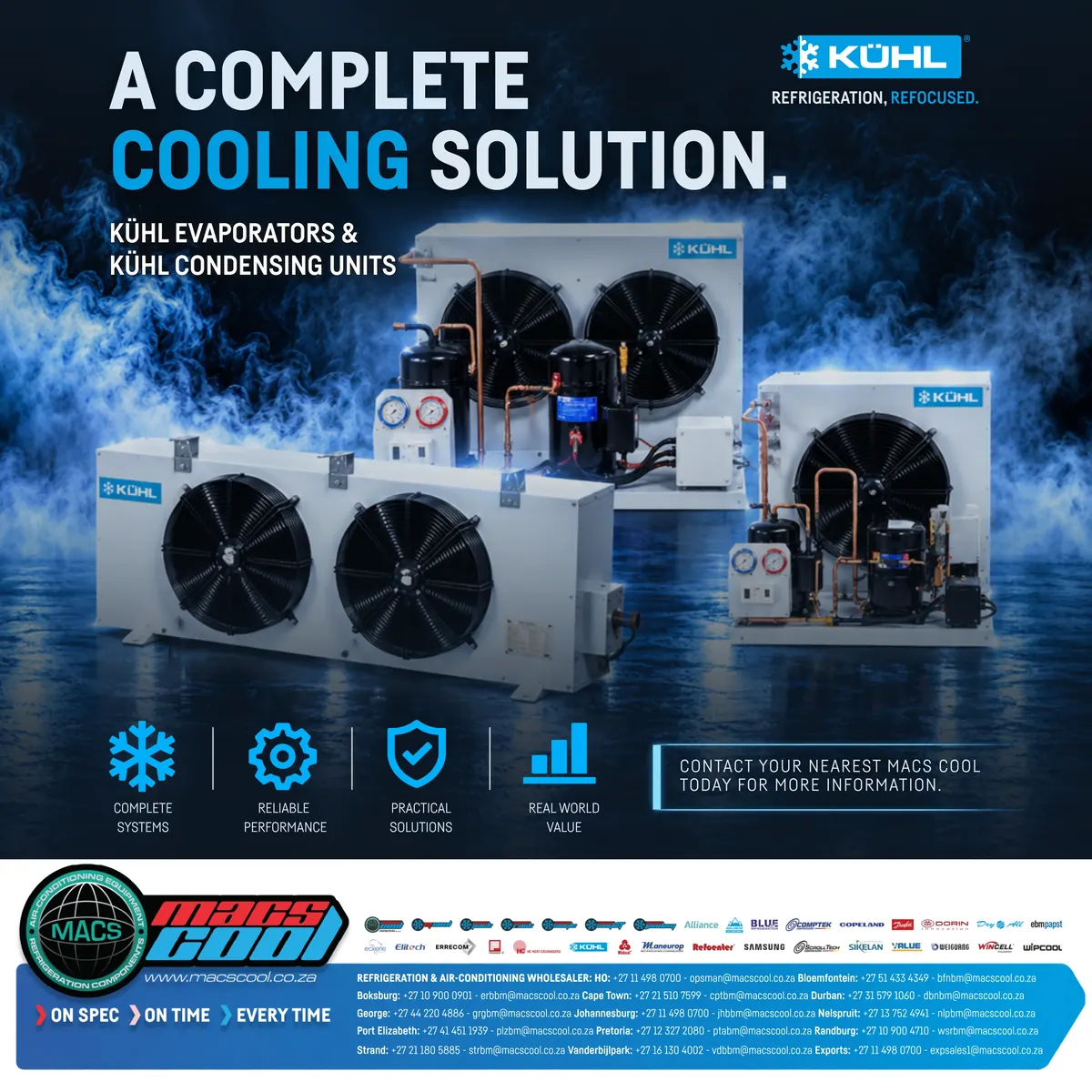
KÜHL, MACS Cool’s in-house brand, provides refrigeration contractors with quality-focused product options for commercial refrigeration applications. The KÜHL refrigeration range includes evaporators, blower coils and condensing units, giving contractors important components to consider when planning installations and system upgrades.
What is in the KÜHL refrigeration range?
1. Condensing units: an essential part of the refrigeration cycle
A condensing unit plays a central role in the refrigeration process.
In a typical vapour-compression refrigeration system, the compressor raises the pressure of the refrigerant vapour. The condenser then releases heat, allowing the refrigerant to condense into a liquid. Together with the evaporator, expansion device and associated controls, these components enable the refrigeration cycle to operate.
Why is selecting the right condensing unit important?
A correctly selected condensing unit helps support:
- Cooling performance: meeting the cooling requirements of the intended application.
- Operational efficiency: matching equipment capacity to system demand.
- System compatibility: ensuring the unit works with the selected evaporator, refrigerant and other components.
- Reliable operation: supporting the system’s ability to maintain required operating conditions when correctly installed and maintained.
A condensing unit that is incorrectly sized or unsuitable for the application may affect performance and operating costs. When reviewing KÜHL condensing units, assess cooling capacity, operating temperatures, electrical requirements, refrigerant compatibility and installation conditions.
2. Evaporators: where heat removal happens
As refrigerant passes through the evaporator, it absorbs heat from the refrigerated environment. This helps lower or maintain temperatures in spaces such as commercial cold rooms and refrigerated storage areas.
Selecting an evaporator requires careful attention to the operating temperature, required cooling capacity and airflow. An evaporator that is unsuitable for the application may struggle to meet the system’s cooling requirements.
The KÜHL evaporator range gives refrigeration contractors an option to explore when planning new installations or equipment replacements.
3. Blower coils: supporting airflow and heat transfer
Effective refrigeration requires more than producing cold air. That air must also circulate appropriately throughout the refrigerated space.
Blower coils combine heat exchange with forced airflow to support cooling within the application. Suitable airflow matters because poor air distribution can contribute to uneven temperatures.
When selecting blower coils, consider the size of the refrigerated space, airflow requirements, temperature conditions and installation layout. The KÜHL range provides blower coil options for contractors to discuss with the MACS Cool team.
Why does component compatibility matter?
Even quality individual components must be correctly matched to operate effectively within a complete refrigeration system. For example, selecting a condensing unit without considering the evaporator’s capacity and operating conditions can result in an unsuitable system combination.
Before finalising equipment, refrigeration contractors should review:
- The cooling load of the application.
- Required operating temperatures.
- Condensing unit and evaporator compatibility.
- Refrigerant specifications.
- Electrical and installation requirements.
- The manufacturer’s technical documentation.
Taking these factors into account helps contractors make informed purchasing and installation decisions.
Supporting refrigeration contractors across South Africa
Commercial refrigeration requirements vary across industries and locations. A food storage facility in Gauteng may have different cooling requirements from a retail refrigeration installation in Durban or a cold storage application in the Western Cape.
While applications differ, the need for suitable equipment and accessible technical product information remains consistent. MACS Cool supports refrigeration professionals through its network of 12 branches across South Africa and its 24/7 online ordering platform.
Customers can enquire about KÜHL refrigeration products, discuss component requirements and explore available purchasing options.
Refrigeration, Refocused with KÜHL
Contact your nearest MACS Cool branch to discuss KÜHL condensing units, evaporators and blower coils for your next installation or upgrade. Registered customers can also order online, 24/7.
On Spec. On Time. Every Time.
Frequently Asked Questions
What is KÜHL?
KÜHL is MACS Cool’s in-house brand. The refrigeration range includes condensing units, evaporators and blower coils for commercial applications such as cold rooms and refrigerated storage, and MACS Cool also sells KÜHL air conditioners. You can enquire about KÜHL products at any of MACS Cool’s 12 branches across South Africa.
What is the difference between an evaporator and a blower coil?
Both remove heat from the refrigerated space. The evaporator is where the refrigerant absorbs heat, while a blower coil combines that heat exchange with forced airflow to circulate cooled air through the space. Which suits a job depends on the size of the space, the airflow needed, the operating temperature and the installation layout.
How do I match a condensing unit to an evaporator?
Match the two on cooling capacity at the same operating temperature, and confirm they use the same refrigerant. Then check the electrical and installation requirements and the manufacturer’s technical documentation for both. Your nearest MACS Cool branch can help you check a KÜHL combination before you order.